How to Have a Beautiful Yard Without Wasting Water
Drought-Tolerant Landscaping in Bozeman: How to Have a Beautiful Yard Without Wasting Water
Bozeman is one of the fastest-growing cities in the country, and with that growth comes real pressure on one of Montana's most precious resources: water. Over 50% of Bozeman's municipal water supply goes directly onto residential and commercial landscapes during the summer months. At the same time, drought conditions have become more frequent and severe across the Gallatin Valley, pushing the City to implement permanent watering restrictions and stage-based drought surcharges.
For homeowners and business owners in the Bozeman area, this creates both a challenge and an opportunity. The challenge: keeping your property looking great with less water. The opportunity: redesigning your landscape to be genuinely beautiful, low-maintenance, and built for Montana's climate — rather than fighting it every summer.
At Western Skies Landscapes, we help property owners across the Gallatin Valley create outdoor spaces that thrive under real Montana conditions. Here's what you need to know about drought-tolerant landscaping and how to make it work for your property.
Why Traditional Lawns Struggle in Bozeman
Most residential lawns in the Bozeman area are planted with Kentucky Bluegrass — a grass that looks great but has some of the highest water demands of any turf species. During Bozeman's peak summer heat in July and August, a Kentucky Bluegrass lawn needs 1 to 1.5 inches of water per week just to stay green. Given that natural rainfall during this period rarely delivers more than a fraction of that amount, the difference has to be made up entirely through irrigation.
That's a significant ongoing cost — both financially and environmentally — especially during years when the City moves into drought restrictions that limit when and how much you can water. Homeowners who've built their entire landscape around high-water-demand plants find themselves facing a difficult choice every dry summer: pay the water bill, watch things go brown, or risk a drought surcharge for exceeding watering windows.
There's a better approach.
What Is Drought-Tolerant Landscaping?
Drought-tolerant landscaping — sometimes called xeriscaping or water-smart landscaping — is the practice of designing your outdoor spaces around plants, grasses, and materials that are adapted to your local climate and can thrive with minimal supplemental irrigation once established.
The word "xeriscape" comes from the Greek word for dry, and it was originally developed in response to water scarcity in the American West. But drought-tolerant landscaping doesn't mean a yard full of rocks and cacti. Done well — and it can absolutely be done well in Bozeman — it means lush native grasses, colorful perennials, fragrant shrubs, and thoughtfully designed outdoor spaces that require far less maintenance and water than a traditional turf lawn.
The City of Bozeman is so committed to this approach that it operates a Drought Tolerant Rebate Program, offering cash back to property owners who install qualifying drought-tolerant and native plants on their property. That's money in your pocket for making a smarter long-term landscaping investment.
The Right Grass for Bozeman's Climate
If you love the look of a traditional lawn and aren't ready to replace it entirely, choosing the right grass species is the most impactful change you can make. Not all turf grasses are created equal when it comes to water demands.
Fine fescues are one of the best alternatives to Kentucky Bluegrass for the Gallatin Valley. They provide a similar aesthetic — green, dense, and attractive — but with significantly lower irrigation requirements. Fine fescues have deeper root systems that access soil moisture more effectively, making them far more resilient during dry spells. Montana State University Extension recommends fine fescues as a water-smart alternative for Montana lawns.
Tall fescue is another solid option, especially for properties with heavier foot traffic or that need a more durable turf. It's deeper-rooted than bluegrass and more drought-tolerant, though it still needs supplemental water during extended dry periods.
Native grass mixes — including species like blue grama, buffalo grass, and western wheatgrass — are increasingly popular in Bozeman for areas where a low-maintenance, naturalized look fits the property. These grasses are adapted to the Gallatin Valley's precipitation patterns and can often survive on natural rainfall alone once established.
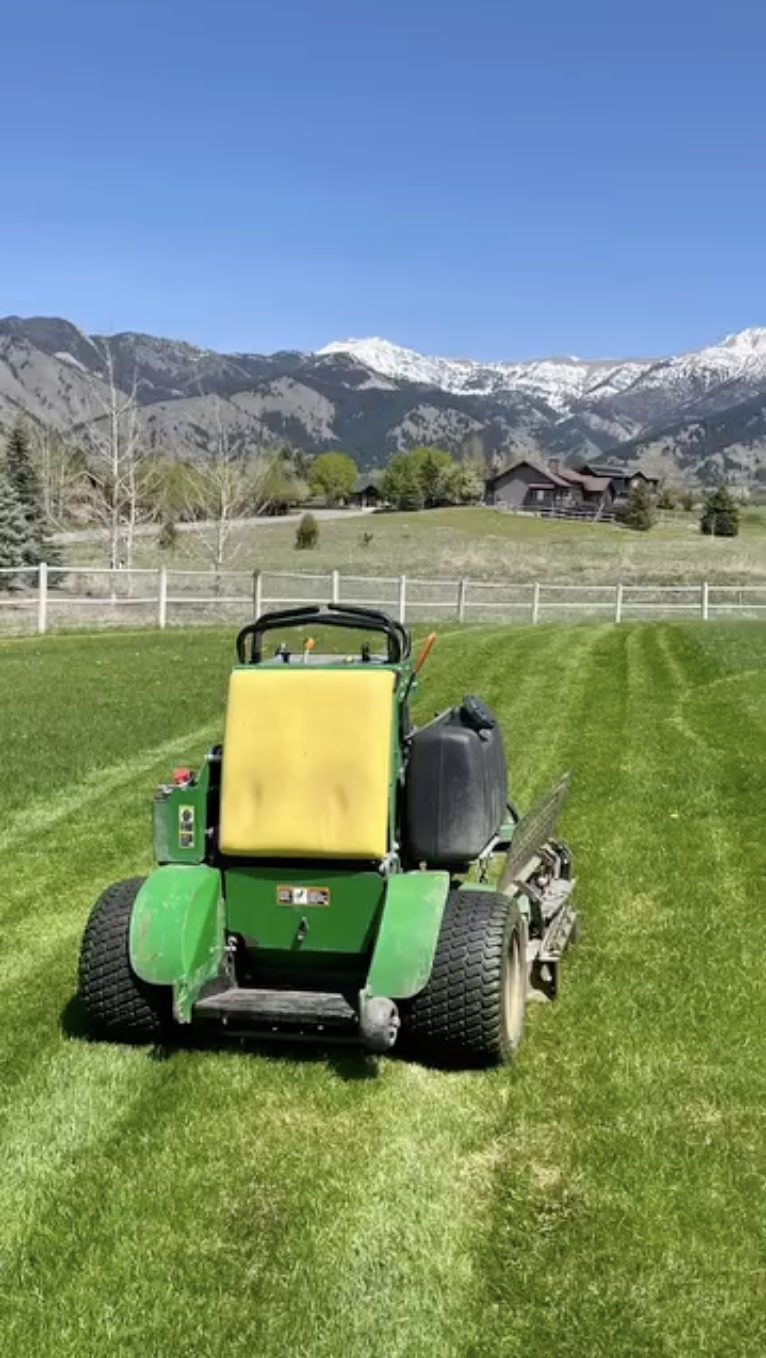
Regardless of which grass type you choose, mowing at 3 inches or higher makes a significant difference in drought resilience. Taller grass shades the soil surface, retaining moisture and keeping root zones cooler during summer heat.
Native and Drought-Tolerant Plants for the Gallatin Valley
Replacing some or all of your irrigated turf with native plants and drought-tolerant perennials is one of the most effective ways to reduce your landscape's water demand while increasing its year-round visual interest. Montana has a rich palette of native species that are genuinely beautiful and perfectly suited to the Gallatin Valley's climate.
Some excellent choices for Bozeman landscapes include:
Perennials: Purple coneflower (Echinacea), black-eyed Susan, Rocky Mountain penstemon, blanket flower (Gaillardia), prairie smoke, and native yarrow are all cold-hardy, drought-tolerant, and attractive to pollinators.
Ornamental grasses: Blue oat grass, Karl Foerster feather reed grass, and blue grama add movement and texture to landscapes while requiring minimal water once established.
Shrubs: Native shrubs like serviceberry, rabbitbrush, and shrubby cinquefoil are excellent for borders, foundation plantings, and naturalized areas. They provide wildlife habitat, seasonal color, and require very little supplemental irrigation after establishment.
Ground covers: Low-growing native ground covers can replace turf in areas that don't receive heavy foot traffic — shaded spots under trees, steep slopes, or narrow side yards where grass always struggles anyway.
The Role of Mulch in Water-Smart Landscaping
One of the simplest and most effective tools in drought-tolerant landscaping is also one of the most underutilized: mulch. A 2 to 3 inch layer of organic mulch around plants and in garden beds does several important things simultaneously:
Reduces soil moisture evaporation by up to 70%
Moderates soil temperature, keeping roots cooler in summer heat
Suppresses weed germination, reducing competition for available water
Improves soil structure over time as organic mulch breaks down
Gives planting beds a clean, finished appearance
In Bozeman's dry summers, properly mulched planting beds can dramatically reduce how often they need to be watered — often allowing established plants to get by on natural rainfall for much of the season.
Hardscaping: Reducing Turf Area Strategically
Not every part of your property needs to be lawn. Many Bozeman homeowners are finding that thoughtfully designed hardscaping — patios, stone pathways, gravel areas, retaining walls, and decorative rock — can replace high-maintenance turf in areas that aren't heavily used, while actually improving the functionality and appearance of the property.
A well-designed combination of hardscape and drought-tolerant plantings can dramatically reduce your total irrigated area, cutting your outdoor water use without sacrificing curb appeal. In fact, many of the most attractive properties in the Gallatin Valley achieve their look through exactly this approach — native plants, natural stone, and smart design rather than wall-to-wall Kentucky Bluegrass.
Western Skies Landscapes handles hardscape design and installation as part of our full-service landscaping offerings, allowing us to create cohesive outdoor spaces that balance beauty, function, and water efficiency.
Smart Irrigation: Making Your Water Go Further
Even if you're committed to keeping traditional turf in some areas, upgrading your irrigation practices can make a major difference in how much water you use. The City of Bozeman offers free sprinkler system efficiency assessments — a trained technician will evaluate your system and provide a customized watering schedule tailored to your specific property and plant types.
Beyond that, a few key adjustments make a big difference:
Water deeply and infrequently rather than running short cycles every day. Deep watering encourages deeper root growth, making plants more drought-resilient.
Install a rain sensor so your system automatically shuts off when it rains. The City offers rebates for rain sensor installation.
Adjust your schedule seasonally. Your lawn needs more water in late July than it does in May. A system running the same program all season is almost certainly over-watering during cooler months and potentially under-watering at peak heat.
A Landscape Built for Montana — Not Against It
The Gallatin Valley is one of the most beautiful places in the country to live. Your outdoor space should reflect that — not fight it. A landscape designed for Bozeman's actual climate will require less water, less maintenance, less money, and fewer headaches than one built around plants and grasses that need constant supplemental support to survive here.
Whether you're starting from scratch, renovating an existing landscape, or simply looking to reduce your water use and bill, Western Skies Landscapes can help you design and install an outdoor space that works with Montana's environment rather than against it.
Contact us today for a consultation on drought-tolerant landscaping, irrigation efficiency, or any of our full-service landscaping offerings across the Gallatin Valley.
Get in Touch with Western Skies Landscapes
Western Skies Landscapes — Serving Bozeman, Belgrade, Gallatin Gateway, Big Sky, Livingston, Paradise Valley, and surrounding communities with professional, 5-star landscaping services.